Proximity Transducer
Features
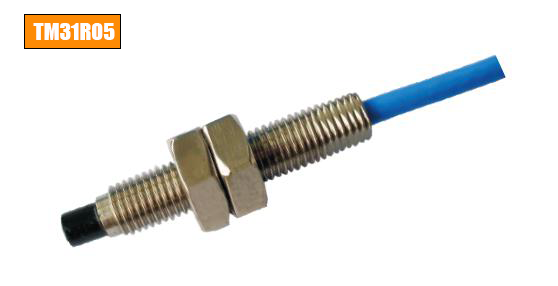
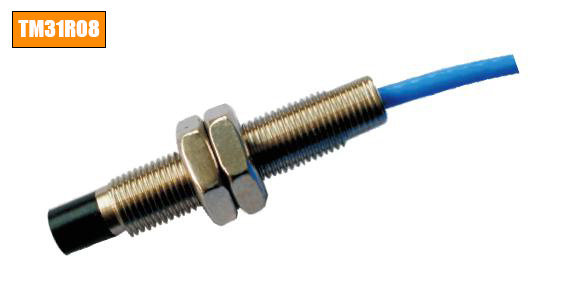
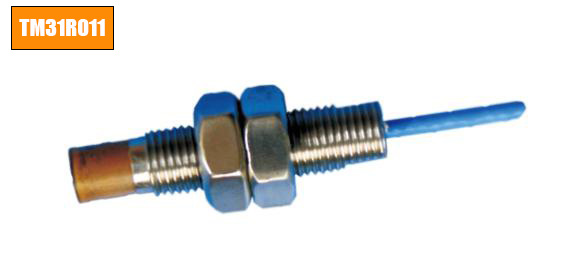
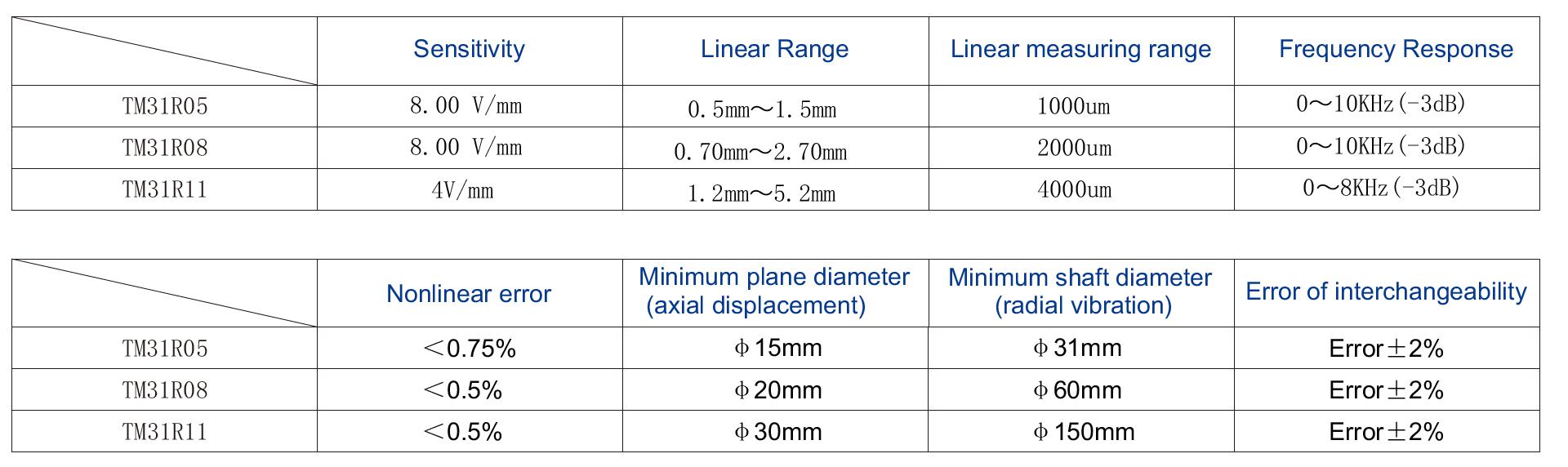
TWDS's TM31R Proximity Transducer is composed of probe (shell), proximitor, locknut and coaxial signal cable. During the manufacturing process, the probe end adopts high-temperature resistant PPS engineering plastic (or ceramic material) to seal the coil through “secondary injection molding", so that the probe can work reliably in harsh environment. As the diameter of the end coil determines the linear range of the sensor, we usually use the diameter of the end coil to classify and characterize various types of probes. Generally, the linear range of the sensor is approximately 1/2~1/4 of the diameter of the probe end. The sensor outputs a voltage signal proportional to the distance between the probe end and the measured conductor surface, which can perform both static (displacement) and dynamic (vibration) measurement, mainly used to measure the relative vibration, displacement, key-phase and rotating speed of the sliding bearing machinery; And the throw of the turbine unit, suitable for industrial sites at higher temperatures. All eddy current sensors of the negative voltage output type comply with the American Petroleum Institute (API) Standard 670 for these sensors.
Proximity Probe And Extension Cable
The advanced mold technology ensures the secure connection between the probe end and the main body. The specially designed probe cable encapsulation allows the cable to be securely attached to the probe end and can withstand 330 N (75 lb) of tension. The extension cable itself has certain corrosion resistance, oil resistance and waterproof functions, which can prevent oil or other liquids from leaking to the outside of the machine along the inside of the cable.
Proximitor
The proximitor can be installed with compact guide rail or traditional screw panel. Both types of mounting base plates have electrical insulation and no separate insulation plate is needed. The front-end processor has strong radio interference resistance, meeting European electromagnetic compatibility standards.
Connectors
Probe, extension cable and proximitor are provided with corrosion resistant gold-plated copper connectors. The joint needs only to be fastened with fingers, and the specially designed mechanical locking device can prevent the connection from loosening; No special tools are required for installation or removal of connectors. Probe and extension cable can be equipped with joint protector when ordering; It is recommended that optional joint protectors be installed in wet environments to provide the necessary environmental protection. Based on different industrial field monitoring requirements, Proximity Transducer be connected with secondary instrument (monitor) or signal conditioner (transmitter) and test instrument input to form a complete equipment status monitoring system.
Technical Parameter
Supply Electricity: -24VDC
Target Matl: 45 steel or 42CrMO steel (AISI 4140)
Interchangeability: the sensitivity generated by exchanging
Deviation: calibrated probes,extension cables and proximitors of the same model within 5m or 9m system.
Ripple: ≤20mV
Drift: ≤0.05%/℃
Output Resistance: 50Ω Field
wiring: 300m allowable
Electromagnetic Compatibility: CE compliant
Isolation: Installation of insulation to ground
Operating and storage: probe-40℃~+150℃
Temperature: Extension cable -40℃~+150℃, Proximitor -40℃~+85℃
Relative humidity: No water immersion,100% condensation when joint protection is provided
Probe end material: PPS
Probe housing material: 304 stainless steel
Probe cable and extension cable: 75 Q 3D axial insulation
Cable armour material: 304 stainless steel
Proximitor housing material: Aluminum Die Cast
Coaxial joint material: Gold-plated brass or beryllium copper
weight:
Probes: Varies based on probe length and size
Extension cable: 31g/m
Proximitor: 220g
Safety approval: intrinsically safe Exia IIC T4, intrinsically safe barrier to be installed when used in hazardous areas.